Introduction
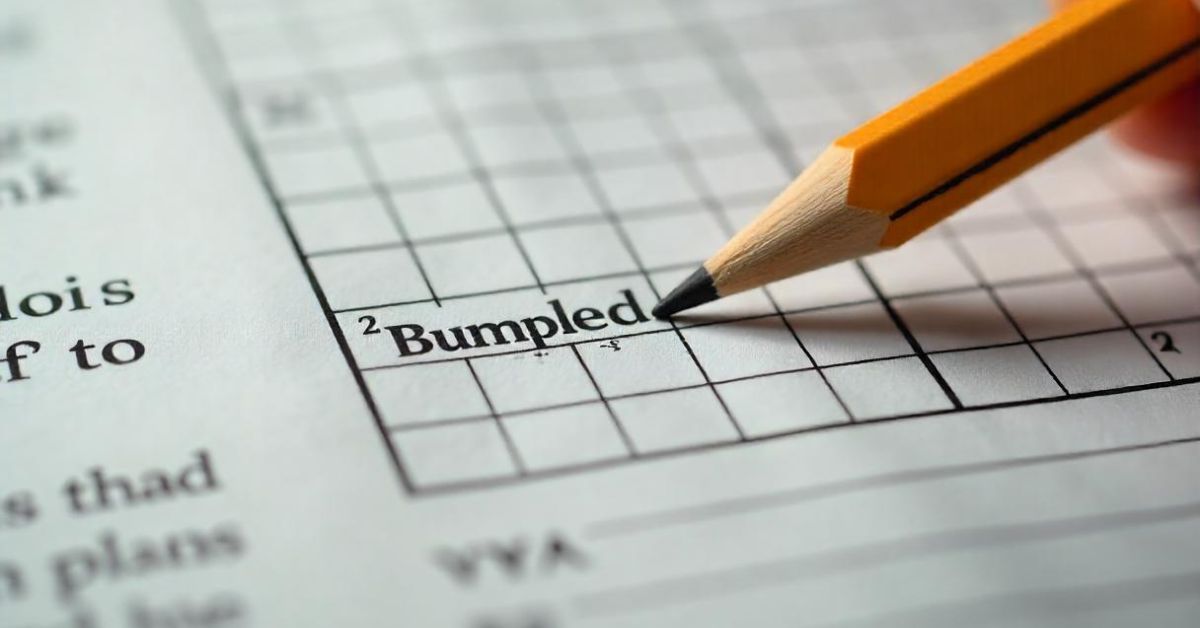
Millions of people worldwide enjoy crossword puzzles, a favorite intellectual pastime, and among the most well-known are those from The New York Times (NYT). One of the several clues that have solvers puzzling, one that has sparked a lot of discussion, is the “bumped items NYT crossword. Whether you are an experienced cruciverbalist or a sporadic solver, this hint has probably halted you in your tracks.
This thorough handbook will cover all you need to know about the bumped things hint. This post provides crossword fans with clear insights, from grasping the context to exploring potential solutions and applying problem-solving techniques. Here is the right place whether you want closure on a difficult clue or only want to hone your problem-solving abilities.
Let’s investigate the subtleties, wordplay, and logic of this seemingly straightforward yet tricky crossword puzzle entry. You will be ready by the end of this guide with tactics and information that will allow you not only to decode this clue but also many other similar ones.
What Does Bumped Things Mean in Crossword Terms?
Your first reaction upon spotting the words “bumped things” in a crossword might be to think of physical collisions. Crossword vocabulary, though, frequently relies on figurative or double meanings.
Possible interpretations:
- Physical contact: things that touch or push each other.
- Schedule changes: Events “bumped” to a different time.
- Popularity increase: a trend or product that has been “bumped” up.
- Delays or barriers: something that interferes with or generates friction.
Crossword tip: Look for clues within the clue—NYT puzzles often employ puns or misdirection. Depending on the context, the bump can suggest rank movement or elevation.
Common Answers to the Clue Bumped Things”
You have possibly considered several possibilities if you have attempted to crack this hint. Some conventional crossword responses include
Possible crossword answers:
- Elbows: something that physically contacts other stuff.
- As in “hip checks” in sports, hips
- Goods—more often used but occasionally found
- Events—hints at rescheduling the calendar
- Carts could trip in supermarkets or airports.
Why elbows is often correct:
- It meets the physical concept of tapping.
- Matches the length of the clue in certain NYT grids.
- The NYT occasionally employs body components in smart riddles.
- It gives action without excessive complication.
Narrow your assumptions by counting the letters needed in the grid. Six-letter response: “Elbows fit just well. Looking at overlapping clues can assist in confirming whether your theory matches the general logic of the riddle.
How The NYT Uses Wordplay to Trick Solvers
The NYT crossword is noted for its astute subterfuge. Knowing how clues like “bumped things” are created will help you solve with more certainty.
Tactics used in clue design:
- Idioms and puns: hints exploiting well-known expressions
- One word has many meanings.
- Red herrings are words that look simple but aren’t.
- Brief cues sometimes conceal sophisticated replies.
Example:
- Clue: “Bumped things”
- Intended misunderstanding: calendar-related bump
- The physical body component (e.g., elbows) is the actual response.
Tip: With different interpretations in mind, re-read the evidence. Frequently, the response is found in your reading of the verb “bumped.” Consider what might be literally or metaphorically struck in a particular situation.
Crossword Puzzle Solving Strategies
Struggling with challenging clues like “bumped items”? Proven techniques for solving follow.
Top strategies:
- Cross-reference other answers. Use intersecting letters to help you to guess.
- First, fill the gaps. Usually, they are simpler.
- Seek themes; NYT puzzles sometimes have one to simplify decoding.
- Use pencil mode; assume answers are preliminary.
- Begin with Monday conundrums. They are simpler and instill confidence.
Helpful mindset shifts:
- Welcome doubt.
- Believe in partial answers.
- Consider possibilities not generally contemplated.
- Avoid becoming obsessed with your first reading.
Daily habit tip: Fifteen minutes of regular exercise improves pattern recognition and allows you to spot misleading cues such as “bumped objects.” Over time, you will acquire intuition about cue structures.
Examples of Tricky NYT Clues Similar to Bumped Things
Studying comparable examples will help you to become proficient in crossword puzzles. Some difficult NYT clues and their real responses will be examined here.
| Clue | Misleading Interpretation | Correct Answer |
|---|---|---|
| Bumped things | Schedule-related | Elbows |
| Cold shoulder | Weather-based | Snub |
| Rock group | Music band | Andes |
| Shell out | Ammo-related | Pay |
| Head over heels | Falling literally | In love |
Lessons from experience:
- Don’t judge words literally.
- Consider context and culture.
- Look for plays on regular idioms.
- Think of how language may operate as a metaphor.
Practice tip: Create a list of indicators that misled you and investigate their answers. Patterns will appear over time. These findings are absolutely priceless for forthcoming puzzles.
Why Context Is Crucial in Crossword Clues
The theme of the riddle and the replies around it will determine the meaning of “bumped objects.” Context is crucial for clue interpretation.
Contextual elements to consider:
The day of the week of the riddle (Monday = simple, Saturday = tough)
- Themes in the Jigsaw
- length of the answer
- Intersecting answers
- Whether it’s a tiny or full-sized puzzle
Example:
Should the puzzle topic be “Body Parts,” “bumped things” most probably refer to “elbows” or “hips.” However, if it’s a subject of travel or scheduling, you might use “flights” or “events.”
Tip: For themed puzzles, always study the title and guidelines. Their clues are priceless. Context transforms everything.
The Psychology Behind Crossword Clues
Crossword puzzles measure cognitive flexibility as well as vocabulary. Challenges in “bumped stuff” change your word processing.
Cognitive elements in clue-solving:
- Lateral thinking: Resolving via indirect reasoning
- Memory recall: Retrieving well-known expressions and clichés
- Inference: Developing informed guesses based on some data
- Creative association: Linking ideas not linked
Crossword brain benefits:
- Enhances short-term memory
- Increases vocabulary
- Increases problem-solving speed
- Reduces stress via concentration
One NYT crossword per day is like a workout for your brain. The mental discipline transfers over to other problem-solving situations.
Case Study: A Real NYT Puzzle Featuring Bumped Things
Let’s examine a genuine NYT crossword containing this hint. Six letters: Bumped stuff
Case Details:
- August 10, 2023, is the puzzle date.
- Clue: Bumped stuff
- Right Answer: Elbows
- Body Movements: Theme for Puzzles
Grade: Medium
- Why it was successful:
- It matched the theme.
- The conjecture was verified by intersecting responses.
- Solvers saw the body part reference.
- Elegant misdirection provided the solution.
Takeaway: Before focusing on particular clues, grasp the general picture of the puzzle. Revisit clues after you’ve solved pieces of the riddle; it makes all the difference.
Crossword Skill-Enhancing Resources
Use dependable tools and resources to improve at solving riddles like “bumped things.”
Suitable Instruments:
- Daily challenges with levels from the NYT Crossword App
- XWord Information: Archive and clue database
- Wordplay Blog (NYT)—Solver Tips and Comments
- Crossword on Reddit: Peer advice and solutions
- Input letters and clues for clues in the Crossword Solver.
Ways of studying:
- Resolve older riddles.
- Participate in a crossword community.
- Read clues and daily explanations.
- Time your solving sessions to track development.
Bonus advice: Watch live-solving walkthroughs on YouTube or blogs from seasoned solvers. You will see in real time how they interpret clues.
How Bumped Things Reflects American English Idioms
Crossword puzzles sometimes include casual or idiomatic phrases strongly entrenched in American English. The hint-bumped things could apply also to facial expressions or phrasal verbs commonly used in daily speech rather than to actual physical contact.
Knowing these metaphors can help solvers face abstract puzzles. Many times, a solver’s ability to connect a little clue to its symbolic or vernacular meaning determines their success.
Example:
- “Bumped heads” means debated or disputed.
- “Bumped up” is increased, as in bumped up the price.
- “Bumped into” translates to met unexpectedly.
- “Bumped off” is slang used often in crime-themed crossword puzzles for died.
Important takeaways:
- Crossword puzzles usually presuppose cultural familiarity with expressions.
- Nonnative speakers could find idioms more challenging for solvers.
- Studying idioms helps one solve faster and more accurately.
The Role of Clue Ambiguity in NYT Crossword Difficulty
One basic characteristic distinguishing NYT puzzles is their planned use of unclear cues. “Bumped Things” is a textbook example; it could refer to music (bumped as in loud beats), accidents, meetings, promotions, or even meetings.
This ambiguity is not a flaw; rather, it’s a feature created to stimulate more sophisticated thought.
Why unclear cues are important:
- It challenges solvers to think about several interpretations.
- It evens the game for both experienced and novice solvers.
- It turns solving the puzzle into cracking a riddle rather than merely interpreting a definition.
Examples of ambiguity in NYT-style clues:
- “Springtime?” Could signify mechanical bounce or season.
- “Leaves fast” could refer to falls quickly or quick exits.
Guidelines on managing ambiguity:
- Read the clue aloud; sometimes the meaning is hinted at by pronunciation.
- Solve cross marks first to reduce probable answers.
- Fixating on your first reading is not appropriate.
Concluding
Though simple, the crossword clue “bumped things” has many layers of significance. From direct translations to deft wordplay, this hint captures what makes NYT puzzles so well-known and difficult. By studying themes, using intersecting letters, and creating vocabulary via LSI terms, solvers can decode complex clues like this with more assurance.
This guide will help you to improve your abilities and examine evidence from a new angle. Whether you’re a crossword buff or a curious novice, knowing clues like “bumped objects” helps your solving trip to be more pleasurable and successful.
FAQs
What does “bumped things” usually mean in the NYT crossword?
It often refers to body parts that bump, such as “elbows.” It’s typically used in a physical or metaphorical sense.
Are there other answers besides “elbows”?
Yes, depending on the grid and theme, possible answers can include “hips,” “items,” or “events.” Always check intersecting clues.
How can I get better at solving vague clues like this?
Practice often, look at answer patterns, and learn how NYT constructs misdirection. Use tools and blogs to break down clue logic.
Are clues like “bumped things” common in crosswords?
Yes, especially in mid-to-late week puzzles where ambiguity is used for challenge. They make the puzzle more engaging and intellectually rewarding.
Where can I find past NYT crosswords to practice with?
Use the NYT Crossword archive or tools like XWord Info and The Wordplay Blog. Many libraries also offer free access.
Other sources and essays on dualeotruyen.blog provide crossword-solving advice and more perceptive puzzle analyses.